
Technology
Apple Finally Folds (And It’s Going to Cost You $2,000)

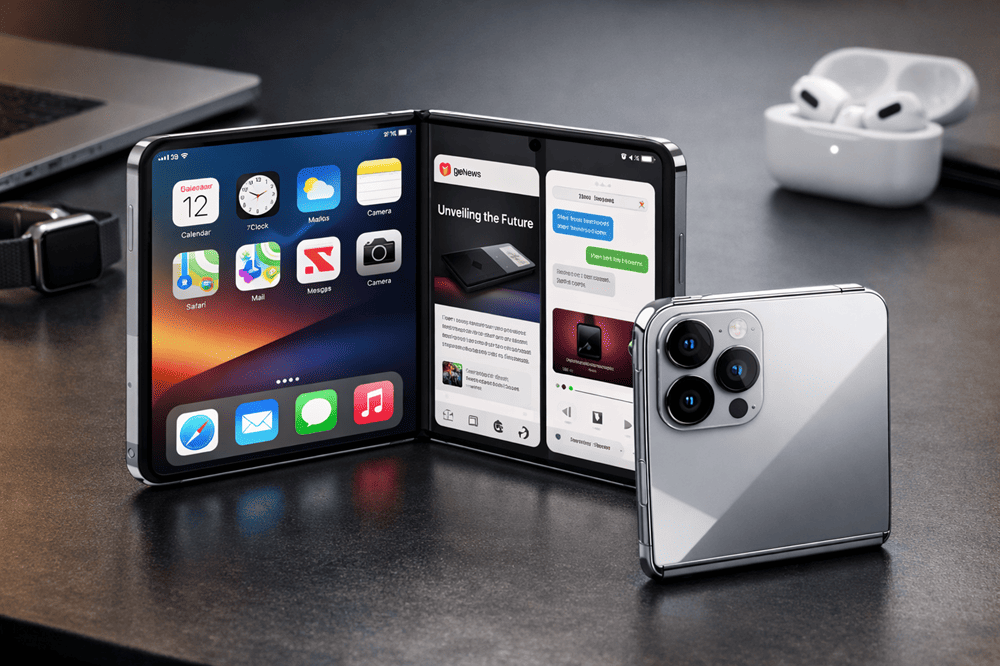
Apple is poised to unveil its first foldable smartphone, the iPhone Ultra, at a September 9 event, entering a maturing market nearly seven years after rivals like Samsung pioneered the category. The device is expected to start around $1,999–$2,400, positioning it as an ultra-premium product that could capture over a fifth of global foldable unit sales and roughly a third of segment revenue in its debut year.
Event Timing and Launch Cadence
Industry reporting points to Wednesday, September 9 as the most likely date for Apple’s fall keynote, with Labor Day (Monday, September 7) ruling out the previously floated September 8 option. If the iPhone Ultra follows Apple’s typical release rhythm alongside the iPhone 18 Pro series, retail availability could begin as early as Friday, September 18.
What the iPhone Ultra Brings
- Form factor: A book-style design with a 5.5-5.8-inch outer display and a 7.58-7.8-inch inner screen, comparable to a small tablet when unfolded.
- Pricing: Starting near $1,999, with some configurations potentially reaching $2,400-$3,000, reflecting Apple’s ultra-premium positioning.
- Hardware: Powered by an A20 chip, Touch ID integrated into the power button, and a dual-battery system totaling close to 4,900 mAh, a telephoto lens may be omitted due to space constraints.
- Display tech: Apple is reportedly targeting a “crease-free” panel, a key differentiator in a segment where durability and screen quality have improved markedly.
Market Impact and Investor Implications
Apple’s entry is expected to catalyze a 20-30% year-over-year surge in global foldable shipments in 2026, with the company projected to capture 22-25% of unit share and 34% of revenue value in its first year. That revenue dominance stems from a higher average selling price (ASP). Foldable ASPs are forecast to rise 18% in 2026 to about $1,485, with book-type models like the iPhone Ultra driving the increase.
For investors, Citi estimates limited initial shipments of around 8 million units in 2026, roughly 3% of total iPhone volume, given the premium price point, with volumes expected to rise in 2027. Still, the strategic move could reshape the premium segment, intensifying competition with Samsung’s Galaxy Z Fold line and potentially lifting category margins despite higher memory chip costs.
Foldable technology has reached a maturity threshold that aligns with Apple’s late-but-decisive entry strategy: recent advances in durability, crease reduction, and silicon-carbon batteries have enabled devices barely thicker than standard flagships. Prediction markets reflect this confidence, with Polymarket pricing an 81-97% probability that a foldable iPhone ships before 2027.
In short, the iPhone Ultra is less about being first and more about setting the benchmark, leveraging Apple’s ecosystem, brand premium, and supply chain scale to define the next phase of the foldable market.



You must be logged in to post a comment Login