
Responsible Money
Sinking Funds: Saving Ahead for the Expenses You Already Know Are Coming

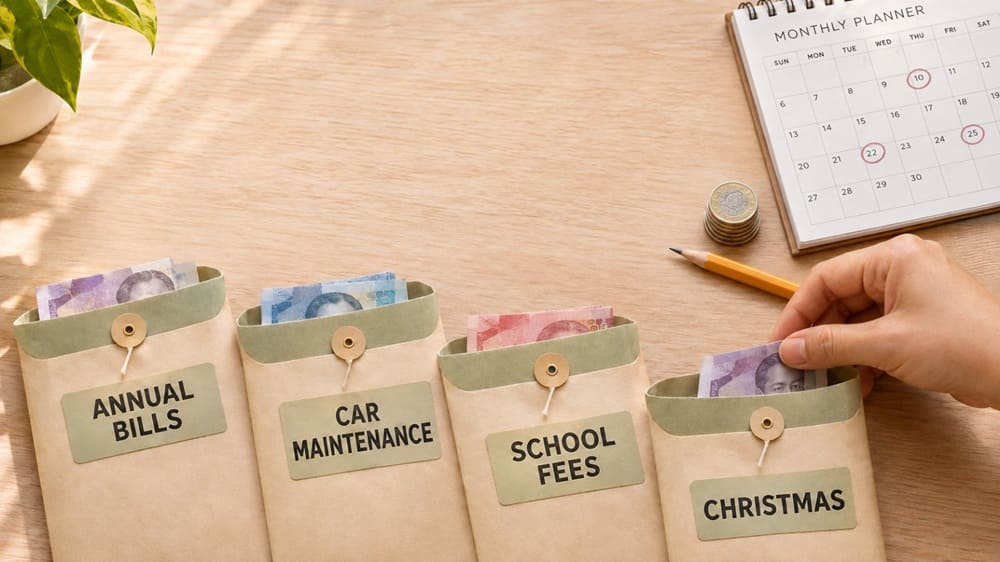
A sinking fund is money you set aside regularly for an expense you already expect, such as tuition, Noche Buena, car maintenance, or an insurance renewal. Instead of scrambling for a large amount when the due date arrives, you save smaller amounts ahead of time.
For many Filipino households, this can be the difference between calmly paying for Christmas, enrollment, or a family trip and relying on credit card debt, salary loans, or “buy now, pay later” schemes.
What a sinking fund is
A sinking fund is a savings pot with a specific purpose and deadline. It is different from an emergency fund: an emergency fund covers unexpected events, while a sinking fund covers predictable costs, even if the exact amount is not yet known.
Think of it as “pre-paying” future expenses in installments. If you know you will need ₱12,000 for Christmas gifts in six months, setting aside ₱2,000 per month makes the season far less stressful.
Why Filipino households need one
Many expenses in the Philippines are seasonal or annual: tuition and school supplies, Christmas and fiestas, birthdays, medical checkups, vehicle registration, and family reunions. These are easier to manage when you spread the cost across several months.
A sinking fund also helps protect your emergency savings. If your air conditioner breaks down or a family member gets sick, you will not have to use money already earmarked for tuition or holiday expenses.
How to build one
- List your upcoming expenses. Look at the next 6-12 months: enrollment, Christmas, birthdays, vacations, insurance, car maintenance, and home repairs.
- Estimate the cost. Check last year’s receipts, bills, or bank records. Add a buffer for price increases.
- Set a target date. For example, tuition may be due in June, while Christmas spending is needed by December.
- Divide the amount by the months left. The formula is:
- Monthly savings = Total amount needed / Months before the expense
- Automate it on payday. Transfer the amount as soon as your salary arrives, before everyday spending begins.
Example: A Filipino family’s sinking funds
| Expense | Target amount | Months left | Monthly saving |
|---|---|---|---|
| Christmas and Noche Buena | ₱15,000 | 6 | ₱2,500 |
| Child’s tuition and supplies | ₱30,000 | 10 | ₱3,000 |
| Car maintenance and registration | ₱9,000 | 6 | ₱1,500 |
| Family vacation | ₱24,000 | 12 | ₱2,000 |
| Birthdays and celebrations | ₱12,000 | 12 | ₱1,000 |
In this example, the family saves ₱10,000 per month across five goals. That may look like a lot, but it prevents a ₱90,000 annual burden from arriving all at once.
Where to keep the money
Choose a place that is safe, easy to access when the expense is due, and separate from your daily spending money.
A separate savings account. Use one bank account for each major goal, or use one account with clear labels in a spreadsheet or budgeting app.
A digital bank savings account. Digital banks often offer higher interest than traditional savings accounts and allow you to create separate goal folders or accounts. For example, Maya offers a base savings rate of 3% per annum and lets users create Personal Goals accounts for different targets.
A high-yield savings account for short-term goals. This works well for expenses due within a year, since your priority is access and safety rather than high investment returns.
A time deposit for longer-term goals. If your goal is 6-12 months away and you will not need the money early, a time deposit can provide a fixed rate. Maya, for example, offers Time Deposit Plus terms with fixed rates depending on the term.
Cash envelopes for very small goals. For minor expenses such as load, small gifts, or a barangay fiesta contribution, labeled envelopes can work but avoid keeping large amounts of cash at home.
Safety reminder
Keep sinking-fund money in a BSP-supervised bank or licensed digital bank, and check the institution’s deposit insurance coverage. In the Philippines, the Philippine Deposit Insurance Corporation insures deposits up to ₱1 million per depositor, per bank.
Avoid putting money you will need within months into stocks, cryptocurrency, or other volatile investments. Those may be suitable for long-term goals, but not for tuition due next enrollment season or Christmas spending in December.
Mistakes to avoid
- Using the fund for unrelated spending. If it is labeled “tuition,” do not use it for a sale or a spontaneous trip.
- Mixing it with your emergency fund. Keep the two separate so planned expenses do not drain your safety net.
- Saving without a deadline. A target date makes it easier to calculate how much to set aside.
- Creating too many funds at once. Start with three to five priorities, such as Christmas, tuition, and car expenses.
- Skipping transfers after a tight month. Reduce the amount temporarily if needed, but keep the habit going.



You must be logged in to post a comment Login