
Technology
Beyond Metro Manila: Where the Philippines’ AI Talent Pipeline Is Taking Shape

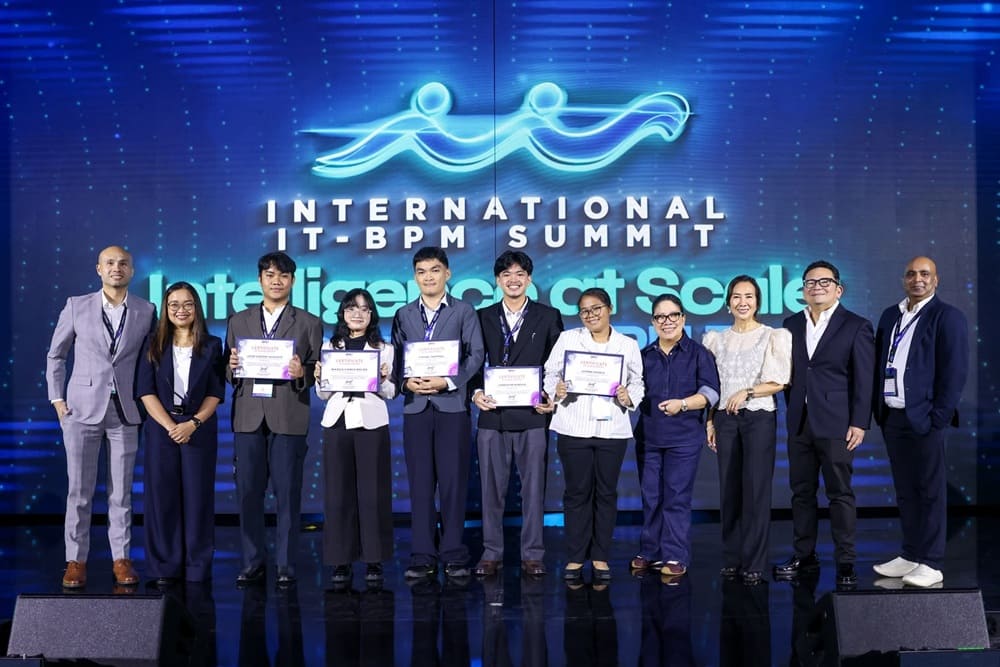
The Philippines’ technology narrative has long revolved around Metro Manila. But as artificial intelligence reshapes industries, a new generation of innovators is beginning to emerge from regional centers such as Cebu and Pampanga, bringing fresh ideas rooted in local realities.
At IBPAP’s Can You HackIT 2026, students from Clark and Cebu did more than compete for recognition. They demonstrated that regional talent can build AI tools with immediate social value. Their work offers a timely reminder that the Philippines’ digital future will not be secured by one city alone. It will depend on how widely opportunity, training, and industry access are spread across the archipelago.
Innovation close to home
In Clark, Team Kyslap of National University Clark developed TestifAI, an AI-powered safety monitor and digital witness built around women’s safety. The platform allows users to call for help, alert their communities, and document incidents as they occur, giving women facing harassment or abuse a way to be heard and believed.
In Cebu, Team Exelia of Cebu Technological University developed CivicLens, an AI-driven platform that helps residents keep track of public infrastructure projects through community-generated reports. At a time when access to government project information remains uneven, the platform reflects a broader demand for transparency and accountability in local development.
AI is often discussed in terms of technical breakthroughs, powerful models, and future possibilities. But the projects that stood out at Can You HackIT were focused on something far less abstract: everyday problems.
One team tackled public safety. Another addressed transparency in infrastructure spending. Both looked at challenges within their communities and asked the same question: how can technology make this better?
Their answers may be prototypes today, but they reflect an approach to innovation that the Philippines would do well to encourage, one that prioritizes real needs over technological spectacle.
Talent beyond the capital
The growth of Can You HackIT reflects a larger shift taking place in the Philippine technology ecosystem. What started as a pilot initiative in Cebu has evolved into a multi-city competition spanning Clark, Cebu, and Davao, bringing opportunities closer to students who have traditionally sat outside the country’s major innovation networks.
The expansion challenges a long-standing assumption that meaningful tech innovation must originate in Metro Manila. Across regional universities, students are developing a nuanced understanding of the issues that shape everyday life in their communities, whether in public services, transportation, agriculture, education, healthcare, or local governance. With access to the right tools, mentorship, and industry connections, that local knowledge can become the foundation for solutions with far-reaching impact.
Cebu and Pampanga are already important IT-BPM hubs outside Metro Manila. Cebu alone accounts for roughly 31% of the industry’s provincial office footprint, while the broader sector supports more than 250,000 workers in the Visayas and has growing hubs in Mindanao.
The traditional pathway, study in the region, move to Manila, build a career, is no longer the only route. As technology ecosystems mature across the country, more young Filipinos can develop ideas, find opportunities, and create value without leaving the communities that shaped them.
AI raises the stakes
The rise of AI makes regional talent development even more urgent. The IT-BPM industry is approaching the two-million-job mark, and its future competitiveness will increasingly depend on workers who can combine AI proficiency with domain knowledge, judgment, empathy, and leadership.
IBPAP has described this vision as the “AI-Enabled Digital Filipino Worker”: not a worker replaced by automation, but one equipped to use AI to deliver higher-value services. The industry has also emphasized the need to scale AI responsibly, expand global capability centers, and invest in both current and future talent.
But the challenge is scale. IBPAP has warned that projected government-funded AI training programs in 2026 may reach only around 68,000 learners, a small share of the country’s 1.9-million-strong IT-BPM workforce. If AI readiness remains concentrated in a few urban centers, the country risks reproducing old inequalities in a new technological era.
Regional hackathons cannot solve that gap alone. But they can help close it by creating visible pathways: a student in Cebu or Clark sees peers building AI products, meets industry leaders, and begins to imagine a career that does not require leaving home.
From hackathon to pipeline
The real test is whether moments like Can You HackIT become part of a sustained talent pipeline.
A hackathon can spark an idea. What follows determines whether that idea becomes a career, a startup, a community deployment, or a scalable product. Students need continued mentorship, access to cloud tools and datasets, internships, industry immersion, and opportunities to refine their prototypes after the competition ends.
The private sector has a role to play here. Companies should treat regional student talent not merely as future recruits, but as potential collaborators. Universities should embed AI literacy, responsible data practices, and product thinking into their programs. Local governments and industry associations should create channels through which student-built civic tools can be tested responsibly in real communities.
The goal should not be to turn every hackathon project into a company. It should be to ensure that capable students, wherever they study, can see a credible route from learning to building to earning.
A national advantage
The Philippines has long been recognized for its English proficiency, service orientation, and ability to work with global clients. But those advantages alone will not guarantee relevance in an AI-driven economy. The next competitive edge will come from a workforce that can understand problems, apply AI thoughtfully, and deliver solutions that create measurable value.
That workforce must be national in scope.
If the country invests seriously in regional AI talent, it gains more than a larger labor pool. It gains resilience: innovation that reflects different communities, industries, and lived experiences. It gains a more balanced economy, where high-value digital work is not concentrated in one metropolitan area. And it gains a generation of technologists who see technology not as an escape from their communities, but as a way to improve them.



You must be logged in to post a comment Login