
Builder Notes
Writing a Simple Business Plan on One Page

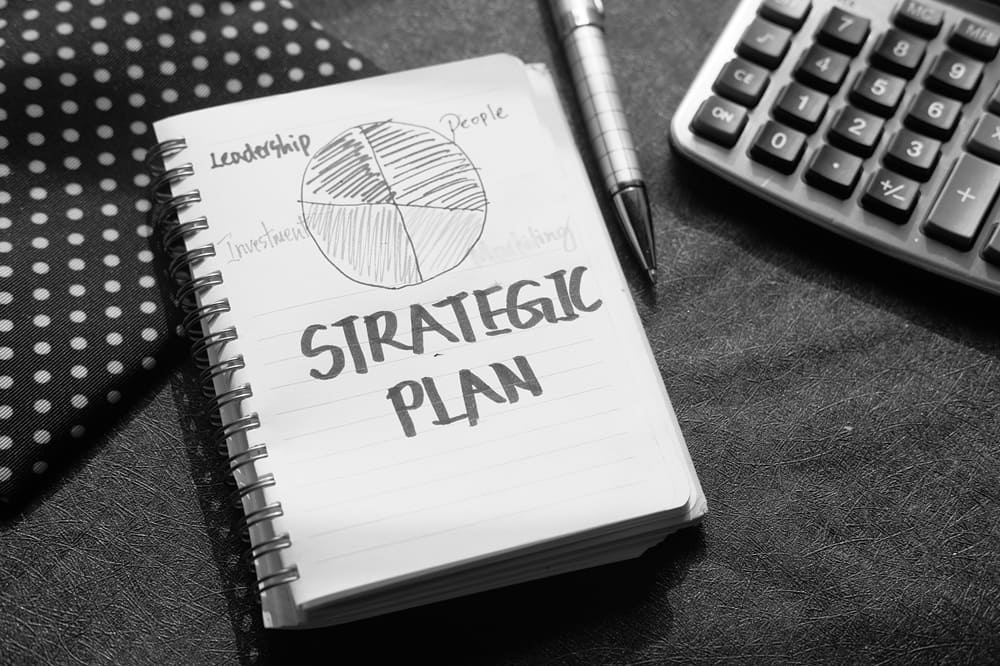
A one-page business plan is a stripped-down version of a traditional plan that captures your core strategy, numbers, and next steps on a single sheet. It’s designed for busy founders who need clarity fast without getting stuck in long documents that no one reads.
Why Use a One-Page Business Plan?
Traditional business plans can run 20-40 pages and take weeks to write. A one-page plan, by contrast, can be drafted in 30-60 minutes and updated every quarter.
It’s especially useful if you:
- Are launching a side hustle or small local business
- Need a clear direction before spending on marketing or inventory
- Want something simple to share with partners, suppliers, or mentors
- Prefer a practical checklist over a formal investor document
The goal isn’t to impress a bank with jargon. It’s to force yourself to answer the most important questions in plain language.
The 9-Section Structure
Most effective one-page plans follow a simple structure with 7-10 sections. Below is a practical 9-section layout you can copy into any document or template.
Aim for 1-2 sentences or 3-4 bullet points per section so everything fits on one page.
1. Business Name + One-Line Description
Start with your business name and a single sentence that explains what you do.
Prompt:
“In one sentence, what does my business do and for whom?”
Example:
“SkinSimple is a small skincare brand selling gentle, affordable products for sensitive skin, primarily to women 25-35 in Cebu.”
2. Problem You Solve
Describe the specific pain point your target customer experiences.
Prompts:
What frustrates my ideal customer right now? What are they already trying (and failing) to fix?
Example:
“Many customers with sensitive skin struggle to find locally made products that are both gentle and affordable, without harsh ingredients or long shipping times.”
3. Solution / Value Proposition
Explain how your product or service solves that problem better than alternatives.
Prompts:
What exactly do I sell? Why would someone choose me over competitors or DIY options?
Example:
“SkinSimple offers a three-product routine (cleanser, moisturizer, serum) formulated for sensitive skin, with transparent ingredients, fast local delivery, and personal chat support.”
4. Target Market
Define who buys from you in specific terms.
Prompts:
Who is my primary customer (age, location, lifestyle, needs)? How big is this group, roughly?
Example:
“Primary: women 25-35 in Cebu City and nearby areas who care about skincare, have mild to moderate sensitivity, and prefer buying from local brands online.”
5. Competition and Advantage
List your main alternatives and explain why you win.
Prompts:
Who else solves this problem (brands, products, habits)? What’s my unique edge (price, quality, convenience, experience)?
Example:
“Alternatives: international brands (expensive, slow shipping), generic drugstore products (harsh ingredients), DIY mixes (unclear safety).
Advantage: local production, sensitive-skin focus, transparent formulas, and fast delivery.”
6. Revenue Model and Pricing
Describe how you make money and at what price.
Prompts:
What am I selling (products, services, bundles, subscriptions)? What are my main price points and margins (roughly)?
Example:
“Revenue from direct online sales of individual products and bundles.
Prices: cleanser ₱250, moisturizer ₱300, serum ₱350; bundle of three at ₱800.
Target gross margin: 55-60%”
7. Marketing and Sales
Explain how customers find you and how you convert them.
Prompts:
Which channels will I use (social media, referrals, offline, marketplaces)? What does my basic sales process look like (from first contact to purchase)?
Example:
“Main channel: Instagram Reels and Stories + DM consultations.
Support: referrals from existing customers (discount code), occasional boosted posts.
Sales flow: content → DM inquiry → product recommendation → GCash payment → local delivery.”
8. Key Milestones (Next 3 – 6 Months)
List 3 – 5 concrete goals with rough dates.
Prompts:
What must happen in the next quarter to move the business forward? What would make me feel this plan is working?
Example:
Month 1: Launch bundled routine and update product photos.
Month 2: Test one paid ad campaign with ₱1,000 budget.
Month 3: Approach two local boutiques for consignment.
Month 4-6: Reach ₱30,000 monthly revenue and 20 repeat customers.
9. Financial Snapshot
Summarize your costs, revenue targets, and break-even point.
Prompts:
What are my main startup and monthly costs? What monthly revenue do I need to cover costs? What’s my 6-12 month revenue target?
Example:
“Startup costs: initial ingredients and packaging ₱8,000; basic equipment ₱3,000.
Monthly costs: materials, packaging, shipping, and small ad budget ≈ ₱12,000.
Break-even: ~₱22,000 monthly revenue.
6-month target: ₱30,000-₱40,000 monthly revenue.”
How to Write Your One-Page Plan in 30 – 60 Minutes
Use this simple workflow to avoid overthinking.
- Brain dump (10 minutes)
Open a blank document and quickly answer each prompt above in rough notes. Don’t edit yet. - Trim and clarify (15-20 minutes)
Rewrite each section into 1-2 sentences or 3-4 tight bullets. Remove jargon and vague phrases like “everyone” or “high quality.” - Add numbers (10-15 minutes)
Fill in your pricing, cost estimates, revenue targets, and milestones with real figures, even if they’re rough. - Final pass (5-10 minutes)
Check that everything fits on one page and that a stranger could understand your business in under two minutes.
Save this as a living document. Revisit it every quarter to update numbers, milestones, and strategy as you learn.
Common Mistakes to Avoid
To keep your one-page plan useful, watch out for these pitfalls:
- Too vague: “Target market: everyone who likes skincare.”
Fix: Specify age, location, and key needs. - No numbers: Describing prices, costs, and goals in words only.
Fix: Add at least rough figures for pricing, monthly costs, and revenue targets. - Too many channels: Listing every social platform and offline option.
Fix: Choose 1 – 2 main channels you’ll actually focus on. - No milestones: A plan with only description, no deadlines.
Fix: Add 3 – 5 time-bound goals for the next 3 – 6 months. - Never updated: Writing it once and never opening it again.
Fix: Schedule a quarterly review to revise assumptions and targets.
Simple Template You Can Copy
You can paste this into a document and fill it in:
Business Name + One-Line Description
[Name] – [what you do and for whom]
Problem
[Main pain point your customer feels]
Solution / Value Proposition
[What you sell and why it’s better]
Target Market
[Primary customer profile]
Competition and Advantage
[Main alternatives]
[Your key edge]
Revenue Model and Pricing
[What you sell and main price points]
[Rough margin or profit goal]
Marketing and Sales
[Main channels]
[Basic sales process]
Key Milestones (Next 3 – 6 Months)
[Milestone 1 + timeframe]
[Milestone 2 + timeframe]
[Milestone 3 + timeframe]
Financial Snapshot
[Startup costs]
[Monthly costs]
[Break-even revenue]
[6 – 12 month revenue target]
A one-page business plan won’t guarantee success, but it will give you a clear direction, sharper decisions, and a simple tool to align your daily actions with your goals.
















You must be logged in to post a comment Login