
Market & Mainstreet
Philippines May Be Past Worst of Economic Pain, But Investment Will Decide 2027 Recovery

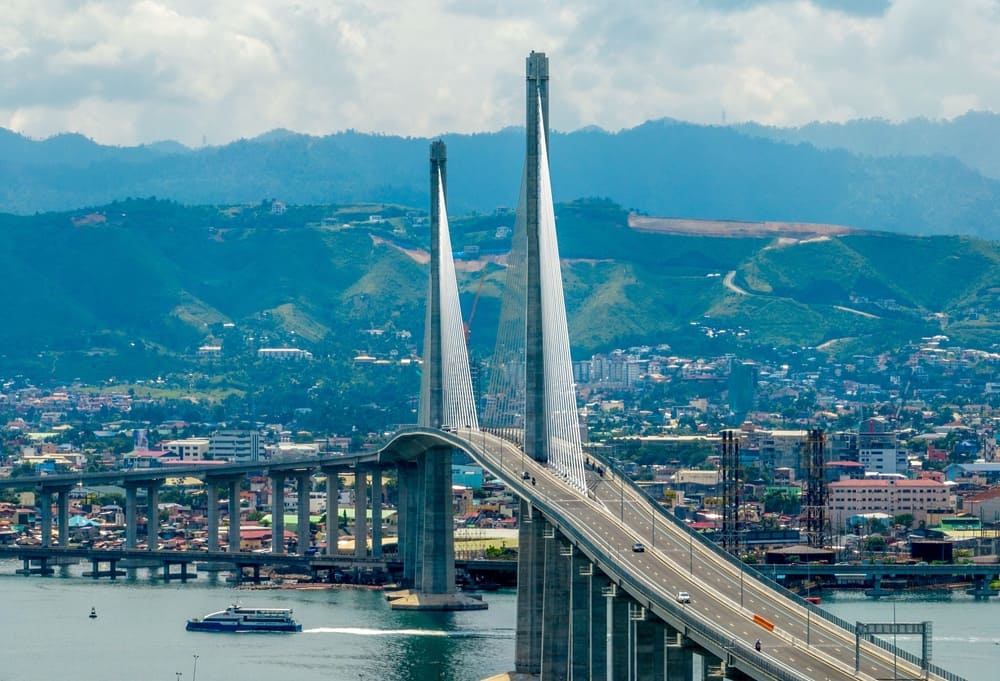
The Philippines is navigating one of its more difficult economic stretches in recent quarters, as elevated food and fuel costs, geopolitical disruption, and weather-related supply pressures weigh on growth. Still, economists increasingly view the current slowdown as a temporary squeeze rather than the start of a prolonged downturn.
David Mann, chief economist for Asia-Pacific at the Mastercard Economics Institute, said the country may already be through the worst of the external shocks that pushed up oil and fertilizer prices earlier in the year. While inflation remains elevated and third-quarter growth came in at just 2.1%, he expects conditions to gradually improve through 2027.
Inflation still biting households
The immediate challenge is the pressure on household budgets. Higher food prices, transportation costs, and business input costs have eroded purchasing power, particularly for lower- and middle-income consumers who devote a larger share of spending to essentials.
The impact has been amplified by the El Niño weather pattern, which has added to food-supply and price pressures. Mann said the situation is serious in the near term, but he does not believe the economy is entering a prolonged period of stagflation.
“I wouldn’t quite use stagflation as the term,” he said in an interview with ABS-CBN News. “I would say it’s a challenge [to] growth with high inflation now, but there are reasons to expect the growth rate to come back over the next 12 – 18 months.”
Recovery hinges on investment
The central question for next year is whether planned public infrastructure and private-sector projects translate into actual spending, construction, and jobs. Mann said stronger investment could lift real GDP growth above 5% in 2027.
Without that investment momentum, however, he estimates growth could fall short by about 1 to 1.5 percentage points, leaving the economy closer to 4% or slightly lower.
“But if you don’t see the investments coming in, short of that, you probably would take around one, one and a half percent off that,” Mann said. “So something closer to say four or slightly below.”
Foreign capital and consumer spending
Concerns over governance and corruption have been raised as possible barriers to foreign direct investment. Mann did not dwell on those issues, but said the Philippines has opportunities that need to be converted into delivered projects.
At the same time, he expects consumer spending to remain supported by more resilient higher-income households and by a continued recovery in international travel. Those trends could provide a cushion while inflation pressures ease.
No recession in the base case
Despite risks from overseas conflicts, domestic political uncertainty, and the run-up to the 2028 elections, Mann does not see a recession as the most likely outcome. He said such a scenario would require several adverse developments to occur simultaneously.
“That’s not something that we would look at as a central case scenario,” he said. “I think you’d have to have all of the things that could go wrong actually going wrong for something that would be that extreme to actually happen.”
Peso outlook may ease policy pressure
The Philippine peso is expected to trade in a relatively stable range of about 62 to 63 against the U.S. dollar, according to Mann. In a more favorable scenario, it could strengthen below 60.
Greater currency stability could reduce the need for the Bangko Sentral ng Pilipinas to pursue further aggressive rate increases. A weaker peso has also boosted the peso value of dollar remittances, supporting consumer spending, while tourism remains another potential source of growth.
“We expect the Philippine peso should be stable,” Mann said. “Let’s say somewhere around say 62, 63 sort of level. Possible to go back below 60 again in a more optimistic scenario.”
What to watch in 2027
For businesses and policymakers, the outlook comes down to execution. If inflation continues to ease, commodity prices stabilize, and investment projects move forward, the Philippines could enter 2027 with a stronger growth trajectory.
If investment remains delayed or constrained, the recovery may be slower and more uneven, leaving growth closer to 4% rather than the more than 5% pace Mann sees as achievable.



You must be logged in to post a comment Login