
#Prayvcorruption
Why Issuing Receipts Protects Both You and Your Customers

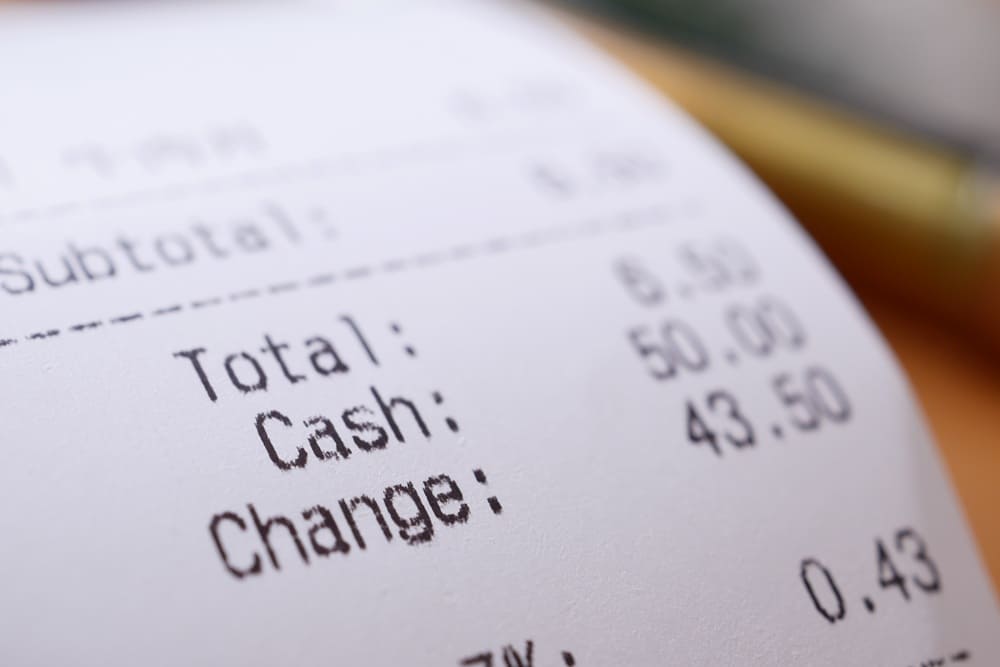
Issuing the right receipt is more than a customer-service courtesy. In the Philippines, it creates a clear, verifiable record of every sale and payment, protecting your business from disputes and tax issues while giving customers the proof they need for reimbursements, expense claims, and warranty support.
The change under BIR rules
Under the Bureau of Internal Revenue’s rules implementing the Ease of Paying Taxes Act, the separate Official Receipt (OR) is no longer the primary document for claiming input tax. Instead, businesses generally issue a Sales Invoice or Invoice for sales of goods and services, which can serve as evidence of both the sale and payment.
The BIR now treats an Official Receipt, Payment Receipt, Collection Receipt, or Acknowledgment Receipt as a supplementary document. These documents prove that you received cash or collected payment, rather than serving as the main invoice for the sale.
For most businesses, the practical term to use is “Acknowledgment Receipt”. It clearly tells the customer that you received their payment, while the invoice remains the primary document evidencing the transaction.
Use the right document
| Situation | Appropriate document |
|---|---|
| Selling goods or services, whether paid immediately or on credit | Sales Invoice / Invoice |
| Receiving payment after an invoice has been issued | Acknowledgment Receipt, Payment Receipt, or Collection Receipt |
| Receiving a donation for an eligible non-stock, non-profit organization | Acknowledgment Receipt or Donation Receipt |
| Using remaining pre-2024 official receipts | May still be used as a supplementary document until exhausted, subject to BIR requirements, including the required “not valid for claim of input tax” notation. |
Using the correct document matters. A sales invoice records the transaction, while an acknowledgment receipt confirms the customer’s payment.
Protection for your business
Stronger accounting records
Properly issued invoices and payment receipts help you record revenue, track collections, and maintain a complete audit trail. This makes it easier to reconcile bank deposits, customer balances, and sales reports.
Without clear documentation, it becomes harder to prove what was sold, when it was sold, and whether payment was actually collected.
Fewer payment disputes
A dated, itemized invoice and a separate acknowledgment receipt reduce confusion over what was purchased, how much was charged, and whether payment was received.
If a disagreement arises, these documents provide objective evidence instead of relying on memory or verbal claims. This can save time, protect your cash flow, and preserve customer relationships.
Better BIR compliance
Using the correct BIR-recognized documents helps support proper tax reporting and reduces the risk of issuing a document that cannot support a customer’s input-tax claim.
Businesses should ensure invoices contain the required information and that payment receipts clearly identify the invoice or transaction being paid. Keeping these records organized also makes audits, reconciliations, and year-end reporting easier.
Reduced fraud risk
A consistent invoicing and receipting process creates a paper trail that makes payments harder to misplace, duplicate, or alter.
It also strengthens internal controls and makes suspicious transactions easier to identify. For small businesses, this simple practice can prevent costly errors and misunderstandings.
Protection for your customers
Proof of purchase and payment
Customers can use a sales invoice to establish what they bought and an acknowledgment receipt to establish that they paid.
Together, these documents are useful for returns, exchanges, warranty claims, and refund requests. They also give customers confidence that the transaction was properly recorded.
Easier reimbursements and tax claims
Employees, business owners, and professionals often need invoices and receipts to claim reimbursements or support deductible business expenses.
A clear invoice, paired with an acknowledgment receipt when payment is collected separately, makes documentation easier and helps customers avoid delays in processing their claims.
Confidence in the transaction
Providing the correct document signals professionalism and transparency.
Customers know that the sale and their payment have been properly recorded and that they have documentation if they need to follow up later.
What a good acknowledgment receipt should include
For an Acknowledgment Receipt for Payment Received, include:
- Your registered business name, address, and contact details
- Receipt number and date payment was received
- Customer name or business name, and TIN where applicable
- A clear statement such as: “Received from [customer] the amount of [amount] as full/partial payment for [invoice number or description].”
- Invoice number or billing statement reference
- Amount received, payment method, and remaining balance, if any
- Authorized signature or name of the person receiving payment
Sample wording
Acknowledgment Receipt
Received from ABC Trading the amount of PHP 10,000.00 as full payment for Invoice No. 00123 dated November 17, 2026.
Payment method: Bank transfer
Remaining balance: NoneReceived by:
Date:
This wording makes the receipt useful as proof of collection while clearly linking it to the original sale.
A simple rule for every sale
Issue a Sales Invoice for the sale, then issue an Acknowledgment Receipt when the customer pays, especially if payment is made later or separately.
This protects your records, supports BIR compliance, and gives customers clear proof of both what they purchased and what they paid. It takes only seconds, but it can prevent costly disputes, strengthen your accounting, and build trust with every customer.
















You must be logged in to post a comment Login