
Enterprise
Filipinos Say High Costs and Hidden Fees are Eroding Confidence in Business

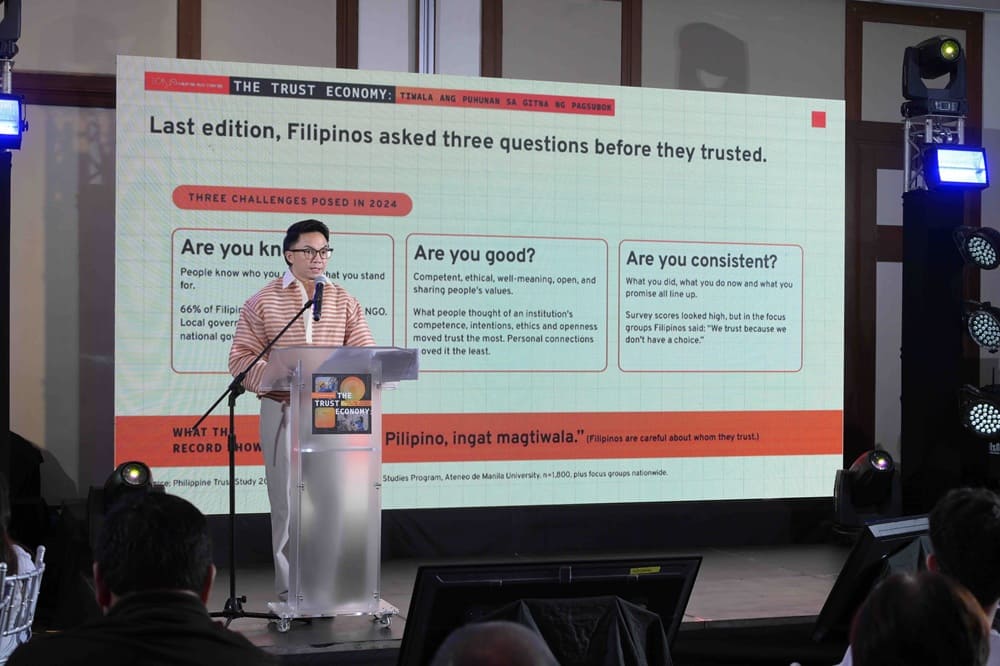
Filipinos are not necessarily losing faith in business. They are putting it on probation. As prices climb and household budgets tighten, consumers say that high costs, unclear fees, and hidden charges are making it harder to trust the companies they rely on every day.
That is the central finding of the first Philippine Business Trust Index, released by the EON Group in partnership with the Department of Sociology and Anthropology and the Institute of Philippine Culture of Ateneo de Manila University. The 2026 Philippine Trust Study gives Philippine business an overall trust score of 72.0 out of 100, but no sector reached the “Robust Trust” category nationally.
The results arrive at a difficult moment for consumers. With headline inflation reaching 7.8% in October 2026, Filipinos are scrutinizing not only what businesses sell, but whether the price matches the value they receive.
Price is the trust test
Among respondents who identified a least-trusted sector, price-related concerns dominated. Nearly one in five, 19.7%, said prices were too high or unreasonable, while 14.7% cited unclear prices or fees. Another 11.7% pointed to hidden charges.
Consumers are not only looking for affordable options. They also want confidence that they know the total cost before committing.
A meal, a phone plan, a delivery fee, a loan, or a hospital bill becomes more than a transaction when charges appear unclear or unexpected. It becomes a question: Is this business being honest with me?
The study suggests many Filipinos answer that question with caution.
Value for money was the leading reason respondents gave for trusting their most-trusted sector, cited by 18.6% of respondents. In other words, Filipinos aren’t necessarily asking businesses to get cheaper. They are asking them to make value visible: fair pricing, clear terms, reliable service, and no unpleasant surprises.
Trust needs proof
The study examined 16 attributes of business trustworthiness. Honesty ranked first, with 34.6% of respondents placing it at the top. It was followed by product and service quality, competence, social or interpersonal trust, genuine care, and accountability and transparency.
Reputation, by contrast, ranked last among the 16 attributes. Only 6.8% of respondents cited reputation as a reason for trusting their most-trusted sector.
That does not mean reputation no longer matters. Rather, it suggests that a strong brand image cannot substitute for consistent conduct. Reputation, the findings imply, is the result of trust, not its foundation.
Filipinos want resibo: proof that a business is honest, delivers what it promises, and stands behind its products and services.
“Are customers staying because they trust a business, or because they have no other choice?” said Malyn Molina, President and COO of the EON Group. “Businesses are part of the systems that keep our country moving, but being essential to people’s everyday lives does not make a business trustworthy.”
Molina added that Filipinos should not have to absorb the cost of poor value and unclear pricing. “It is up to businesses to give people real reasons to choose them, and to keep choosing them,” she said.
No sector is fully secure
The study examined nine major business sectors. Food and Agriculture, Healthcare and Pharmaceuticals, and Commerce, E-Commerce, and Retail formed the top tier, each scoring around 75. The differences among them were too small to establish a meaningful ranking.
At the lower end, Business Process Outsourcing and Information and Communications Technology, and Tourism and Travel both scored 68.6, while Real Estate and Construction recorded 67.7. All three fell within the Fragile Trust category.
FinTech scored 70.8, placing it near the boundary between the 61-70 and 71-80 trust bands. The finding highlights a growing challenge for digital services: convenience and accessibility may attract customers, but transparency, security, and consumer protection determine whether they stay.
The broader message is that distrust is not confined to one industry. It is tied to business behavior, especially how companies price, communicate, deliver, and respond when something goes wrong.
Big or small, trust must be earned
The study also found that company size does not guarantee public confidence. Large enterprises scored 72.3 on the index, while micro, small, and medium enterprises scored 71.7. The 0.6-point difference falls within the survey’s margin of error, indicating comparable levels of reported trust.
That finding challenges the assumption that Filipinos automatically trust bigger companies more. Consumers appear to judge businesses less by scale than by whether they deliver consistent value and treat customers fairly.
Business representatives interviewed in focus group discussions said trust can have practical consequences. They cited companies with clean compliance records receiving regulatory “green lanes,” including cases where license validity was extended from one year to three. Participants also said trusted brands may be better able to retain customers and maintain market share even when prices rise.
These observations came from stakeholder discussions rather than survey measurements, but they point to a wider business case for trust: it can reduce friction, strengthen customer loyalty, and create room for companies to operate more sustainably.
Promises must match practice
The research also emphasized the gap between what companies say and what they do. Workers in the focus groups pointed to fair treatment and management accountability, while regulators stressed accurate reporting and compliance.
For consumers, that consistency shows up in ordinary moments: a price that is disclosed upfront, a product that performs as advertised, a service that arrives when promised, and a complaint that is taken seriously.
“Honesty is not judged in isolation,” said Wilfred Luis Clamor, PhD, of Ateneo de Manila University’s Department of Sociology and Anthropology. “It is reinforced, or undermined, by the quality of products and services, the consistency of what businesses deliver, and how they treat the people affected by their decisions.”
A baseline for trust
The 2026 Philippine Trust Study combined a nationally representative survey of 800 Filipino adults across 160 barangays in 84 cities and towns, conducted through face-to-face interviews, with focus group discussions involving 82 participants and interviews with 18 business executives. The survey has a margin of error of plus or minus 3.5 percentage points.
Fieldwork took place from May to August 2026. The study is descriptive and exploratory, meaning its findings reflect public perceptions rather than independently verified assessments of business conduct.
EON has studied public trust in the Philippines since 2011. Earlier editions, published as the Philippine Trust Index, measured the percentage of Filipinos who said they trusted particular institutions. The 2026 edition introduces the Philippine Business Trust Index, creating a baseline for tracking trust across nine major sectors.
Businesses face a growing reality: trust is no longer secured by reputation alone. With budgets under pressure, consumers are examining their choices more carefully and demanding greater transparency and value.
As Molina put it, “Tiwala ang puhunan. That begins with katapatan: a business that keeps its promises and treats people the way it says it will.”



You must be logged in to post a comment Login