
Enterprise
FWD and JA SparktheDream: Filipino Students Win Asia-Pacific Challenge With Waste-to-Value Innovation

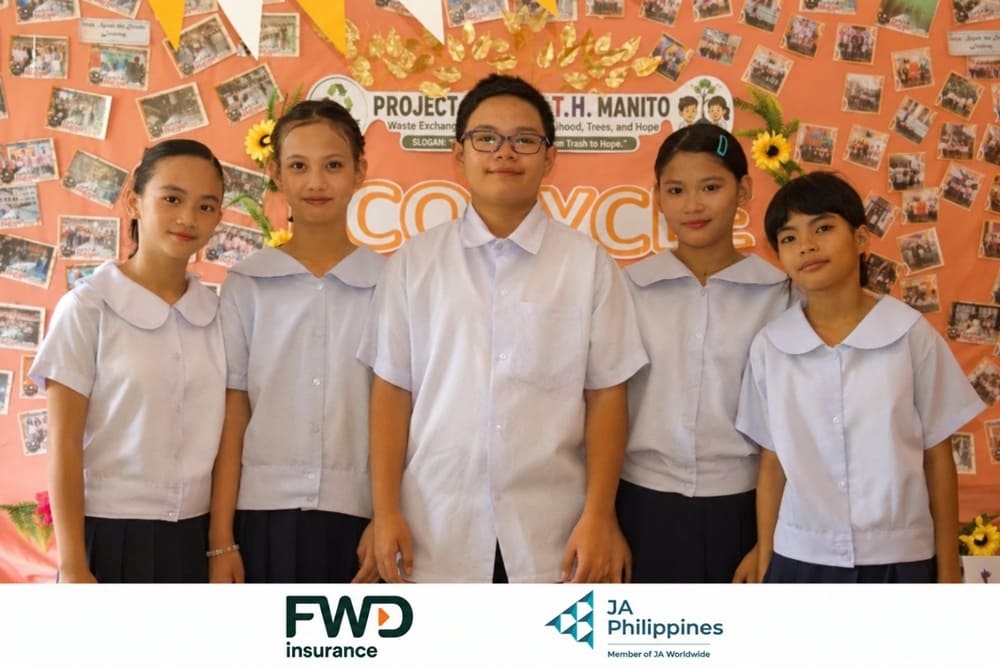
A team of students from Albay, Philippines, won the JA SparktheDream Social Challenge 2026 Asia Pacific Finals with an idea that turns discarded materials into community resources, showing how financial literacy can become a tool for sustainability and local action.
Team EcoSpark, from Manito Central School in Albay, took first place with “Ecocycle Saving Hub,” an initiative designed to transform waste into useful resources while promoting environmental sustainability and supporting the surrounding community.
“These students remind us that when a young person cares about something and has the knowledge and encouragement to act, they can help their communities grow,” said Cathy Knezevic, Group Chief Corporate Affairs Officer at FWD Group. “Financial literacy gives young people the confidence to make informed choices, plan ahead and dream big.”
From classroom lesson to community solution
The annual Social Challenge is the culmination of JA SparktheDream, a financial-literacy programme operated by Junior Achievement (JA) and supported by FWD Group. It asks students to move beyond classroom learning and develop practical solutions to issues affecting their neighborhoods.
This year’s Asia Pacific Finals brought together 14 teams from seven markets: Hong Kong SAR, Indonesia, Japan, Malaysia, the Philippines, Singapore and Thailand. Judges evaluated entries on social relevance, innovation and creativity, feasibility, and the teams’ passion and persuasion.
EcoSpark’s winning idea stood out for tackling two pressing challenges at once: cutting waste and finding new uses for materials that would otherwise end up discarded. Instead of treating sustainability as a distant concept, the team focused on practical solutions that communities can take part in and benefit from.
“One of the greatest investments we can make is in the potential of young people,” said Dr Vivek Kumar, President and Chief Executive Officer of JA Asia Pacific. “At JA, we see every day how financial capability, entrepreneurial thinking and real-world learning empower learners to become changemakers in their communities.”
Kumar added that the Social Challenge gives young people a platform to “turn purpose into action,” showing that one idea, supported by knowledge, confidence and collaboration, can create meaningful change.
A wider wave of youth ideas
Malaysia’s Team Colsafearn, from SMK Pantai Sepang Putra in Selangor, placed second with a mobile application that rewards users for collecting waste and helping keep communities clean and safe. Third place went to Indonesia’s Team Finshield, from SMP Nation Star Academy in Surabaya, for a board game that helps families learn about scam prevention and financial literacy.
Together, the top three projects reflect a common theme: young people are using financial knowledge, digital tools and creative thinking to address problems close to home, from waste management to online fraud.
The winning projects show that financial literacy can be a starting point for wider social innovation. EcoSpark turns waste into community value, Colsafearn encourages cleaner neighborhoods through rewards, and Finshield helps families protect themselves from scams, each using a different approach to make financial education more practical and relevant.
Financial literacy with a purpose
Now in its fifth year, JA SparktheDream combines financial education with social and life skills. Students learn through interactive games, digital activities and classroom sessions supported by FWD volunteers, building capabilities that extend beyond personal money management.
Since launching in Hong Kong SAR and Singapore in 2022, the programme has reached more than 60,000 students across 370 schools and involved more than 1,500 FWD volunteers. Its scope has expanded from basic financial literacy to financial inclusion, social responsibility, wellbeing and community engagement.
Among surveyed participants, an average of 88 percent said they gained a better understanding of money’s role in daily life, while 81 percent reported greater awareness of community needs.
Why the win matters
EcoSpark’s victory is a reminder that financial literacy is not only about budgets, savings and spending. It can give young people the confidence to identify a local problem, imagine a solution and mobilize others around it.
For FWD and JA, the result illustrates the programme’s wider ambition: to help young people see themselves not only as future earners and consumers, but as problem-solvers capable of improving the places where they live.
As Knezevic noted, financial literacy can help young people make informed choices and dream big. As Kumar argued, it can also help them turn purpose into action. For the students of Manito Central School, that means seeing waste not as a problem to discard, but as a resource with the potential to strengthen their community.



You must be logged in to post a comment Login