
Market & Mainstreet
Iran War Spurs Clean Energy Policies but Global Emissions Still Rise

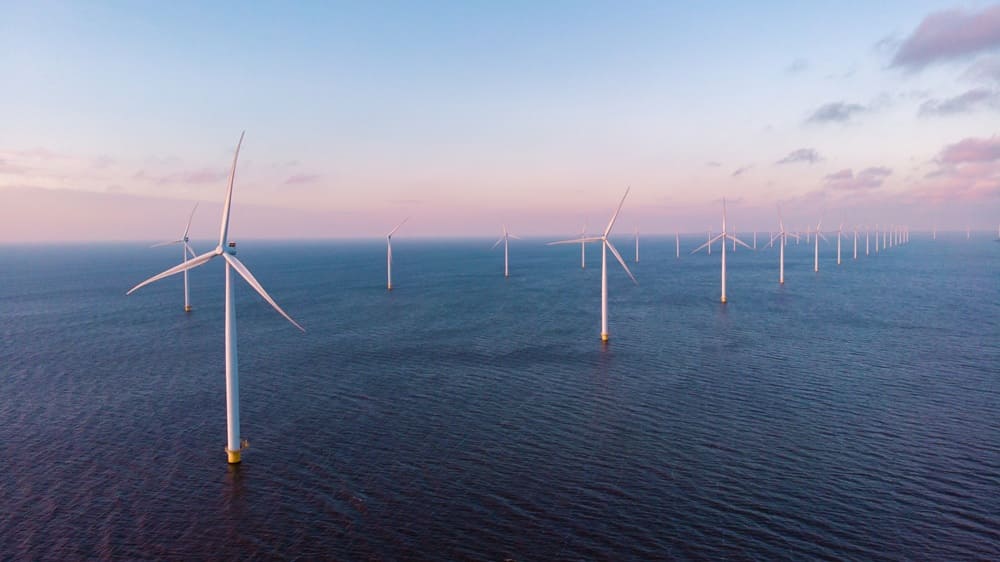
Seven months after the United States and Israel launched military operations against Iran, the conflict has prompted more than 30 governments to adopt policies favoring clean energy, yet global greenhouse gas emissions continue to climb, and clean energy investment has lost momentum worldwide.
The Associated Press reported Wednesday that 33 governments had adopted policies to switch from fossil fuels to electricity or improve energy efficiency in response to the war, as of September 9, according to the International Energy Agency. The Netherlands, Spain and the United Kingdom are among the most aggressive, pursuing electric vehicle incentives, renewable energy expansion, heat pump adoption and building retrofits simultaneously.
Despite this wave of policy action, global greenhouse gas emissions rose 0.2% in the first half of 2026 compared with the same period a year earlier, according to Climate TRACE. Global investment in clean technology manufacturing and deployment fell 17% in the first half of 2026 compared with the first half of 2025, according to Rhodium Group’s Clean Investment Monitor, driven largely by a decline in China.
A Price Shock With Uneven Consequences
The war has produced the largest sustained oil price shock since the 1990 Gulf War. Fossil fuel importers have paid $330 billion more than pre-war market expectations for seaborne crude oil, refined products and liquefied natural gas in the six months since the conflict began, according to the Centre for Research on Energy and Clean Air. The European Union bore the largest share at $78 billion, followed by China and India.
Countries that had invested in clean energy after previous energy crises saved an estimated $36 billion in avoided fossil fuel imports during the first five months of the conflict, the same research found, with China and Japan saving the most.
The picture differs sharply by region. In the U.S., Europe and India, where economies are more exposed to volatile oil and gas prices, solar investment grew and wind investment held stable or increased, said Hannah Pitt, a director at Rhodium. U.S. clean technology investment in the second quarter of 2026 reached $75 billion, a 22% increase from the first quarter and the second-highest quarter on record.
Philippines Accelerates Solar and Efficiency Measures
The Philippines has emerged as one of Asia’s most active responders to the oil price shock, fast-tracking renewable energy projects and launching nationwide energy efficiency campaigns to shield households and businesses from volatile import costs.
In March, after the U.S. and Israel attacked Iran, Philippine President Ferdinand Marcos Jr. declared an energy emergency and issued Executive Order 110, directing agencies to accelerate permitting, clearances and grid connections for priority renewable projects. The government committed to fast-track 1.4 gigawatts of renewable energy through 22 solar, wind and hydropower projects by the end of April.
The Department of Energy (DOE) also announced a ten-year auction program in February 2026 (Green Energy Auctions 6 through 9), offering at least 25 additional gigawatts of onshore wind, solar and storage capacity with deliveries running from 2027 through 2035. By 2027, the share of installed renewable energy capacity is targeted to rise from 30% to 42%, helping diversify the country’s energy mix and reduce exposure to imported fossil fuel price shocks.
Rooftop Solar Boom
Rooftop solar has roughly doubled to about 1,300 megawatts in the past 12 months, driven by soaring LNG and oil prices that shortened payback periods from 4.0 years to 3.1 years. Asian LNG spot prices spiked to around $20.8 per MMBtu, up roughly 80.6% since August 2025, making solar increasingly attractive for households and businesses.
To support adoption, the Philippine government offers low-interest loans of up to ₱500,000 for residential clean energy systems. The DOE has also streamlined net-metering applications nationwide through a Joint Memorandum Circular with the Department of the Interior and Local Government and the Department of Public Works and Highways, standardizing requirements and defining processing timelines.
Energy Efficiency and Conservation
The DOE launched the “O.N.E.: Oras Natin sa Efficiency” campaign, encouraging households, businesses, institutions and government facilities to reduce unnecessary electricity consumption. Under Memorandum Circular No. 114, government flexible work arrangements saved 508 megawatts nationwide as of May 31, 2026, equivalent to ₱200 million in fuel and power costs.
Local governments have joined the effort. Five LGUs in Eastern Visayas partnered with the DOE to install rooftop solar photovoltaic systems and undertake energy-efficient retrofits in public buildings under the Solar Solutions for Government and Emergency Response Program (SSG-ERPB). Fifteen local government units in Metro Manila also formally joined the initiative, implementing energy-efficient retrofits and rooftop solar in government facilities. In Cebu, Governor Pamela Baricuatro issued Executive Order No. 47, adopting the “Takna Pagpawong Sa Suga” (TAPS) Program, which observes an energy reduction hour every Monday from 8 p.m. to 9 p.m.
World Bank Support
In June 2026, the World Bank Group approved new financing for the Philippines to expand access to affordable, reliable electricity and strengthen water security. The Second Energy Transition and Climate Resilience Development Policy Loan (DPL) supports measures including the full operationalization of the Renewable Energy Market, integration of electric vehicle charging into utility planning, and the launch of the Philippines’ first-ever offshore wind auction, targeting 3.3 gigawatts of contracted capacity by 2030. This is expected to mobilize approximately US$7 billion in private investment.
Too Early to Declare a Winner
Experts remain divided on whether the war will ultimately accelerate or hinder the energy transition. Princeton climate and international affairs professor Michael Oppenheimer wrote that while many anticipated a rush toward other fossil fuel sources, “at this point, it looks like events could turn out to be a net winner for renewables”.
Stanford climate scientist Rob Jackson acknowledged he had not expected oil prices to remain above $90 or $100 a barrel for so long, but cautioned that sustained action over “years, to decades” is needed to make a dent in the climate problem.
Samantha Gross of the Brookings Institution said the war is reframing the energy transition as a matter of national security, not just environmental policy. “That widens the appeal,” Gross said. “It brings in not just people concerned about the green side, but people concerned about hard security”.


















You must be logged in to post a comment Login